
TETANUS: More Than Just a Rusty Metal | What Everyone Needs to Know About This Preventable Disease
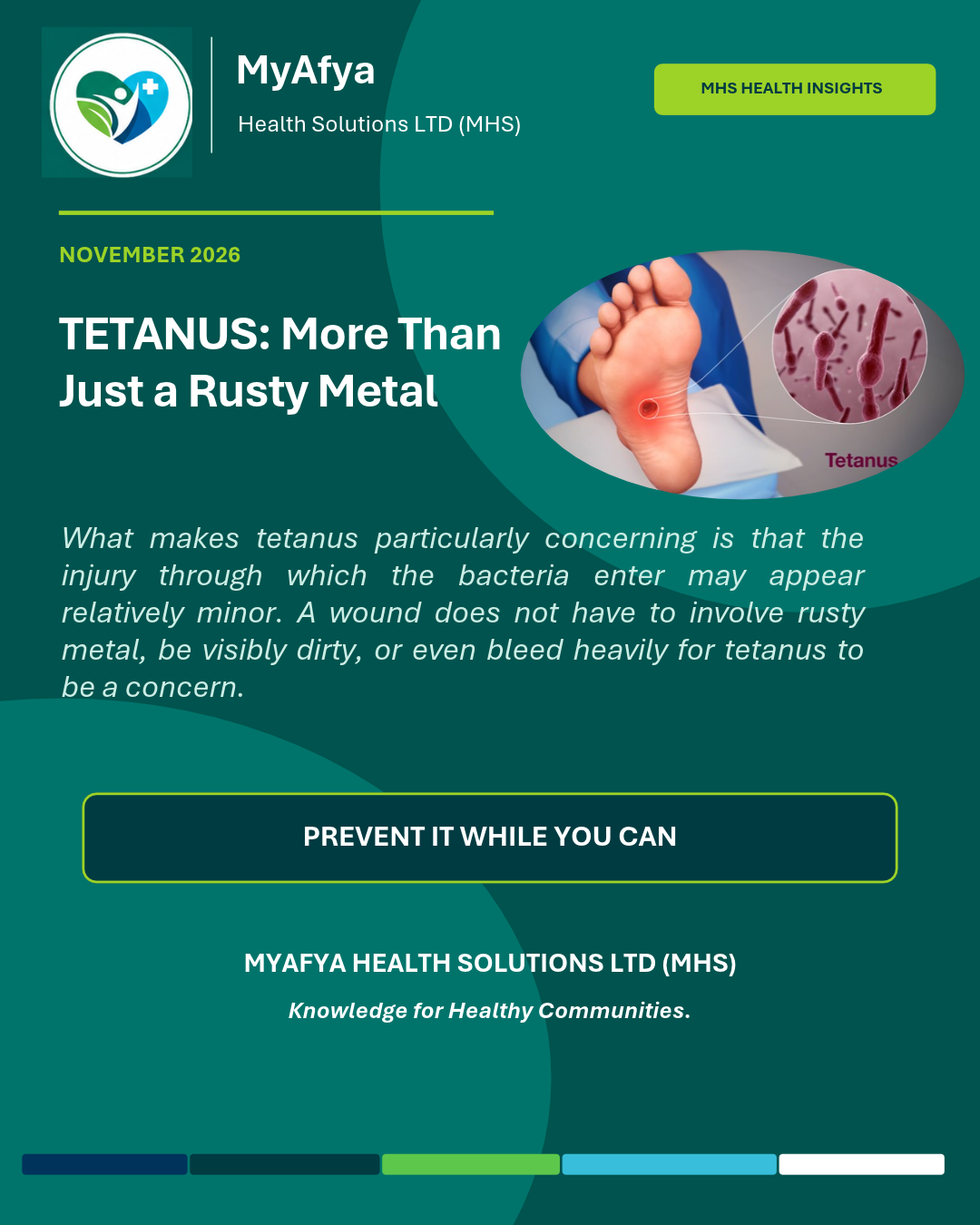
What makes tetanus particularly concerning is that the injury through which the bacteria enter may appear relatively minor. A wound does not have to involve rusty metal, be visibly dirty, or even bleed heavily for tetanus to be a concern.
Introduction: The danger we often overlook
Imagine someone stepping on a rusty nail while working in the garden. Their immediate thought might be: I need to get a tetanus shot.
Now imagine that the same person gets injured by a sharp piece of tree branch, falls on a rough stone and cuts open their skin, or sustains a deep wound while working in the field.
Would tetanus be part of the conversation?
Probably not.
They may wash the wound, apply an antiseptic, cover it with a bandage, and continue with their day, believing they have done everything necessary.
This difference in how we perceive these injuries reveals an important gap in public understanding of tetanus. We have become so accustomed to associating the disease with rusty nails and metal objects that we often overlook other injuries that can also expose us to the bacteria responsible for it.
But tetanus is not caused by rusty metal. It is not even limited to injuries involving metal objects.
A cut from a tree branch, a puncture wound from a thorn, an injury sustained after falling on soil or stones, a burn, an animal bite, or a wound contaminated with dirt or animal waste can all present a potential risk of tetanus.
The common factor is not necessarily the object that caused the injury. It is whether bacterial spores enter the body through damaged skin or tissue.
And this is where understanding tetanus becomes important.
Tetanus is a serious, potentially life-threatening infectious disease caused by a bacterium known as Clostridium tetani. The bacterium produces highly resistant spores that can survive in the environment, particularly in soil, dust, and animal and human faeces.
When these spores enter the body through a wound, they can become active under favourable conditions and produce a powerful toxin that affects the nervous system. This toxin interferes with the normal control of muscle activity, resulting in muscle stiffness, painful spasms, and potentially life-threatening complications.
What makes tetanus particularly concerning is that the injury through which the bacteria enter may appear relatively minor. A wound does not have to involve rusty metal, be visibly dirty, or even bleed heavily for tetanus to be a concern.
The encouraging news is that tetanus is preventable through vaccination, appropriate wound management, and safe childbirth and umbilical cord care.
Understanding the different ways tetanus can occur, recognizing its symptoms, and knowing how to protect ourselves are essential steps towards preventing this disease.
Because the real question is not whether you were injured by a rusty nail. It is whether you are adequately protected against tetanus when an injury occurs.
1. Understanding how tetanus develops
Clostridium tetani produces resistant spores commonly found in soil, dust, and animal and human faeces. These spores can enter the body through cuts, puncture wounds, burns, animal bites, crush injuries, and other breaks in the skin.
Deep wounds and damaged tissue with limited oxygen can provide favourable conditions for the spores to become active. The bacteria then produce a neurotoxin called tetanospasmin, which interferes with the nervous system's ability to regulate muscle activity.
Normally, the nervous system sends signals that allow muscles to contract and relax. Tetanus toxin disrupts this balance, causing uncontrolled muscle contractions, stiffness, and painful spasms.
Importantly, tetanus is not transmitted from one person to another. It develops when bacterial spores enter the body through an appropriate route.
And no, rust itself does not cause tetanus. A clean-looking object can carry bacterial spores, just as an injury caused by wood, soil, or another material can present a risk.
2. Recognizing the signs and symptoms
Tetanus symptoms generally appear between 3 and 21 days after exposure, although the timing can vary.
Common warning signs include:
Lockjaw: Difficulty opening the mouth due to stiffness of the jaw muscles.
Muscle stiffness: Particularly around the neck, back, and abdomen.
Painful muscle spasms: Sudden contractions that may be triggered by touch, light, or noise.
Difficulty swallowing: Caused by stiffness and spasms affecting swallowing muscles.
Facial muscle contractions: Sometimes producing an unusual fixed facial expression.
Breathing difficulties: In severe cases, spasms can interfere with normal breathing.
Tetanus can progress rapidly and become life-threatening. Anyone experiencing unexplained jaw stiffness, painful muscle spasms, or difficulty swallowing, particularly after an injury, needs immediate hospital assessment.
3. Tetanus and newborn babies
Tetanus is also an important maternal and newborn health concern. Neonatal tetanus occurs when bacterial spores enter a newborn's body, commonly through contamination of the umbilical cord stump.
This can happen when unsterile instruments are used to cut the cord, unclean hands are used during cord care, or contaminated substances are applied to the umbilical stump.
A newborn may initially appear healthy before developing difficulty breastfeeding, excessive crying, muscle stiffness, or painful spasms.
Maternal tetanus vaccination helps protect newborns because protective antibodies can pass from the mother to the baby during pregnancy. Clean delivery practices, sterile cord-cutting instruments, and proper umbilical cord care are equally important.
Pregnant women should attend antenatal clinics to have their vaccination history assessed and receive recommended immunizations.
4. Who is at risk?
Anyone without adequate protection can develop tetanus. However, particular attention should be given to farmers, construction workers, gardeners, waste handlers, children who play outdoors, people with incomplete vaccination, and individuals who sustain deep wounds, burns, or contaminated injuries.
Tetanus is not restricted to children or people working with metal. Adults also need to maintain appropriate vaccination protection throughout life.
5. Can tetanus be treated?
Yes, but tetanus requires urgent hospital treatment and may require intensive care.
Treatment can include tetanus immune globulin to neutralize toxin that has not yet attached to nerve tissue, wound cleaning and removal of damaged tissue, antibiotics to control the bacteria, medicines to manage muscle spasms, and respiratory support where necessary.
Recovery may take weeks or months, depending on the severity of the disease.
One important misconception is that surviving tetanus provides immunity. It does not. People who recover still need appropriate tetanus vaccination.
6. How can you protect yourself?
Vaccination is the most effective way to prevent tetanus. Tetanus-containing vaccines are included in routine childhood immunization and are also important for maintaining protection later in life. The WHO recommends six doses across childhood and adolescence, consisting of three primary doses and three booster doses. Adults should consult healthcare professionals about their vaccination history and any additional doses required under national guidance.
Wound management is equally important. If you sustain an injury:
Wash the wound with clean running water and soap.
Carefully remove visible surface dirt without digging into the wound.
Cover it with a clean dressing where appropriate.
Seek prompt medical assessment for deep, dirty, puncture, burn, crush, or animal-bite wounds.
Have a healthcare professional assess whether you need a tetanus vaccine dose or tetanus immune globulin.
The appropriate treatment depends on the nature of the wound and your vaccination history. Cleaning a wound or taking antibiotics does not replace indicated tetanus vaccination and preventive treatment.
For newborn protection, ensure appropriate maternal vaccination, hygienic delivery, and proper umbilical cord care.
7. Common misconceptions: Myths versus facts
Myth | Fact |
|---|---|
Only rusty nails cause tetanus. | Spores can enter through many types of contaminated wounds. |
Small wounds are harmless. | Even small puncture wounds can present a risk. |
Tetanus is contagious. | It does not spread from person to person. |
Cleaning a wound is enough. | Vaccination history and medical assessment also matter. |
Only children need tetanus protection. | Adults also need appropriate vaccination. |
Recovering from tetanus provides immunity. | Previous infection does not guarantee protection. |
Conclusion: Prevention starts with awareness
Tetanus reminds us that serious health threats can arise from injuries that initially appear ordinary. A cut from a tree branch, a puncture wound from a thorn, or an injury sustained during everyday work may seem insignificant, but the possibility of exposure should not be overlooked.
We must move beyond the belief that tetanus is simply a rusty-nail disease. Understanding the different routes of exposure, maintaining vaccination protection, practising proper wound care, and seeking timely medical attention are essential to preventing it.
Protect yourself. Keep your vaccinations up to date. Take injuries seriously. Seek medical attention when necessary.
Disclaimer: This article is intended for public health education and does not replace professional medical assessment, diagnosis, or treatment.
Comments (0)
Loading comments...
Related articles

FORM 4 GRADUATES. WHAT NOW?
Form Four exams are over. Are our young people ready for life? Discover why self-awareness matters for their future.

One Health: Why Antimicrobial Resistance Starts at Home Before Reaching the Hospital
"Did you know that drug resistance doesn't just start in hospitals? Discover how our everyday habits at home—from livestock care to waste management—drive the global AMR crisis through the lens of 'One Health' in Tanzania."

Are Pharmacies Becoming the Frontline of AMR in Tanzania?
AMR is not only a medical challenge. It is a behavioral challenge — woven into culture, shaped by economics, reinforced by convenience, and sustained by a public that has largely never been given a clear enough picture of what is actually at stake.